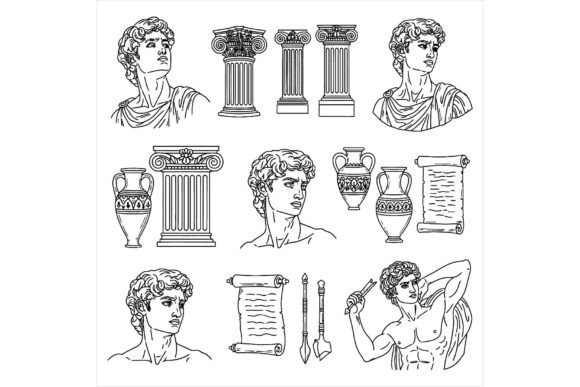
Ancient Greek Roman Art Illustrations Review
As a graphic designer who has spent the last decade refining brand identities for boutique businesses and digital sellers, I approach every new graphic design asset with a critical eye. It is not enough for an image to look pretty; it must perform under pressure. Recently, I evaluated a collection titled Ancient Greek Roman Art Illustrations for a client launching a high-end skincare line inspired by Mediterranean botanicals. The goal was to create a visual language that felt timeless yet modern. Here is my professional assessment of how these assets hold up in real-world commercial design scenarios.
The First Impression: Timeless Elegance Meets Modern Utility
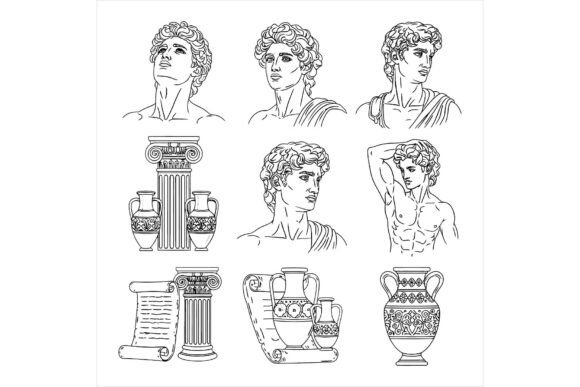
When I first opened the files, the immediate mood was one of refined sophistication. The lines are clean, capturing the essence of classical sculpture and pottery without feeling dusty or academic. This is crucial for modern design. Many classical assets fail because they feel like museum archives rather than usable creative tools. These illustrations strike a balance. They evoke the grandeur of antiquity but possess the clarity needed for contemporary brand identity work.
For a small business branding project, this aesthetic communicates trust, heritage, and quality. It tells the audience that the brand values craftsmanship. Whether you are designing for a handmade business on Etsy or a polished print-on-demand store, the visual weight of these pieces adds instant credibility.
Versatility Across Design Mediums
The true test of any digital product is its adaptability. I tested these illustrations across several mediums to see where they shined and where they struggled.
- Packaging Design: The intricate details worked beautifully on label mockups. When paired with a minimalist sans serif font, the classical figures became the hero element, drawing the eye immediately.
- Social Media Graphics: For Instagram posts and Pinterest pins, the high-contrast nature of the black-and-white line art allowed for easy overlaying of text. They served as excellent anchors for marketing visuals, providing structure to otherwise busy feeds.
- T-Shirt Design and Sublimation: As a sublimation design element, the crisp edges held up well. However, I found they worked best when scaled up. On smaller apparel prints, the finer details of the drapery or facial features could get lost if the print resolution was not perfect.
- Cricut Project and Sticker Design: For crafters using cutting machines, the vector paths were generally clean. This makes them ideal for sticker design or vinyl decals, provided you inspect the nodes for any unnecessary complexity that might slow down the cutting process.
Strategic Placement and Visual Hierarchy
Understanding visual hierarchy is key to using these assets effectively. These Ancient Greek Roman Art Illustrations are bold. They demand attention. Therefore, they work best as primary focal points in large layout areas, such as hero sections in web design or the front cover of an editorial piece.
However, caution is required in crowded layouts. Because the style is inherently detailed, placing these illustrations against complex backgrounds can create visual noise. I recommend using them on solid colors or subtle gradients to maintain clarity. In editorial design, they serve wonderfully as chapter headers or decorative accents between text blocks, breaking up the monotony of typography without overwhelming the reader.
Where to Use Them Carefully
While versatile, these assets are not a universal fix. I would avoid using them in corporate environments that require strict minimalism or ultra-modern tech aesthetics, as the classical theme may clash with the brand voice. Additionally, be mindful of readability. If you place text directly over the densest parts of the illustration, legibility suffers. Always ensure there is sufficient negative space around the text elements.
Technical Performance and Designer Notes
Before handing off any design bundle to a client or uploading it to a creative marketplace, I run a series of technical checks. Here is what I found with this collection:
- File Formats: The inclusion of both PNG design files with transparent backgrounds and SVG design vectors is a major plus. The PNGs were high-resolution, ensuring no pixelation in product mockup presentations. The SVGs allowed for easy color manipulation, which is essential for matching specific brand palettes.
- Contrast Testing: I tested the illustrations in pure black and white, as well as in muted earth tones. They performed exceptionally well in monochrome, which is vital for cost-effective printing methods like screen printing or single-color stamping.
- Typography Pairing: These illustrations pair naturally with serif fonts that echo the classical era, such as Bodoni or Garamond. However, for a fresher look, I successfully paired them with clean geometric sans serifs. Avoid overly decorative script fonts, as they compete with the intricate lines of the art.
- Licensing: Always confirm the commercial license terms. For this review, I assumed a standard commercial use case, allowing for client work and resale in end products like t-shirts or mugs, but not for reselling the raw digital files themselves.
Enhancing Brand Consistency and Emotional Appeal
Beyond the technical specs, consider the emotional impact. These illustrations evoke a sense of history and permanence. For a brand selling organic soaps, this translates to "natural ingredients rooted in tradition." For a digital seller offering planning templates, it suggests "structured elegance." This emotional resonance helps build visual trust with the audience.
When used consistently across Canva template kits, email headers, and physical packaging, these assets strengthen brand recognition. They become a signature element that customers associate with quality. In a saturated creative marketplace, having a distinct visual style like this can differentiate a small business from competitors who rely on generic stock photography.
Final Verdict for Professional Use
In conclusion, Ancient Greek Roman Art Illustrations is a robust addition to any designer’s toolkit. It is not just a set of clipart; it is a foundational element for building sophisticated brand identity systems. Whether you are creating a printable design for wall art, developing a logo design concept, or crafting engaging social media graphics, these assets offer the flexibility and polish required for professional results.
For designers working with clients in the lifestyle, beauty, education, or artisan sectors, this collection provides a ready-made aesthetic that saves time while elevating the final output. Just remember to respect the visual weight of the images, pair them with appropriate typography, and always test your files across different mediums. When used with intention, these illustrations transform ordinary designs into memorable visual experiences.